Why Maine’s Water Tastes So Good - It’s the Trees

Imagine a rainy summer day in Maine. We’ve just parked in the forested lot by Sebago Lake State Park Beach. Tall white pine, broad sugar maple, and cooling, shade-tolerant hemlock line the path to the water, arching overhead like a cathedral of fresh air. Their outstretched limbs catch the rain.
You know the sound, rain drumming across the canopy. Drops pinball from branch to branch and runs rivulets down tree trunks on its journey to the forest floor. Their shelter is an obvious gift, but these trees are doing far more than softening the storm. If we were to lose them, replacing what they quietly provide would come at a very real cost.
For now, they’re still here, and we reach the shoreline feeling refreshed with Sebago Lake stretching out slate-blue to the horizon. The water, dancing with the rain, is startlingly clear. As the clouds lift and the surface settles, it becomes crystalline.
On an average day, you can see down about 34 feet, according to Environmental Protection Agency (EPA) measurements. On exceptionally clear days, visibility reaches 50 feet beneath. From a boat, it can feel like you're flying. Because of this extraordinary clarity, the EPA grants the Portland Water District a rare exemption from filtration. That means water from Sebago Lake doesn’t need to be physically filtered for debris before it is chemically treated for safety.
Of roughly 13,000 public water sources that draw water from rivers or lakes in the United States, 12,950 must filter their water. Only around 50 are exempt. Sebago is one of these, providing exceptionally clean drinking water to more than 200,000 people in the greater Portland area. Many factors have conspired to shape this stunning lake, but the trees play a starring role.
Just as the forest protects you from driving rain by stealing energy from raindrops, it protects the soil from being broken apart and carried away. Furthermore, the forest floor offers a soft landing of branches and leaves left over from New England’s famous fall foliage. As a result, water that runs right into the lake is nearly as clean and clear as the rain itself.
The rest, slowed by roots, moss, and debris, forms pools and puddles that seep slowly into the ground. This nourishes the trees themselves and replenishes underground water stores that slowly flow toward the lake. As water moves through the soil, chemical and biological processes conspire to further clean it, straining out grit and trapping or breaking down other pollutants. A forest is nature’s water filter.
And trees don’t just help clean the rain; they shape the conditions that produce it. Leaves have tiny pores called stomata that take in carbon dioxide and release oxygen. In the process, water vapor escapes. That moisture increases local humidity levels, which can rise and cool to form clouds.
Trees can also seed clouds. Those hints of fresh pine and sweet birch on the breeze come from volatile organic compounds (VOCs), which can serve as tiny surfaces for water vapor to condense around, a little like how dew forms on grass. While forests don’t generate storms on their own, higher humidity levels and condensation “seeds” can tip the balance toward more frequent or heavier rainfall.
The forest systems that give us oxygen, shade, clean water, and rain are ancient and elegant, but they aren’t guaranteed. And while the trees in Sebago State Park keep dirt out of the water at the local beach, keeping an entire lake this crystal clear takes a forest the size of a watershed.
Sebago Lake sits at the bottom of a 440-square-mile basin that begins in Bethel, Maine. About 84% of that land, around 370 square miles, is forested. Losing even 8% of those trees, experts say, could muddy the waters enough to jeopardize Sebago’s filtration waiver. A University of Maine study estimated the price of replacing the forest’s free filtration with a man-made plant at $150 million in 2021. Adjusted for inflation, that’s closer to $177 million today, plus several million more each year for operating costs.
As it happens, Maine has a long history of rallying to protect the places we love. Sebago Clean Waters, an alliance of conservation organizations including the Portland Water District, is carrying on the tradition. Their goal is to permanently preserve at least 25% of the forest in the next 15 years. Today, about 15% is protected.
“We're all in it together,” says Paul Hunt, the environmental manager at the Portland Water District and a member of the alliance. “I'm proud to say a whole group of people have spent 25 years ensuring that 17,000 acres of those trees can never be cut down.”
The benefits reach far beyond drinking water. “Not only do we get all that free natural water treatment, but there are fish in the streams, and there are deer running through those woods,” says Hunt. “It's a filtration plant you can hike on.”
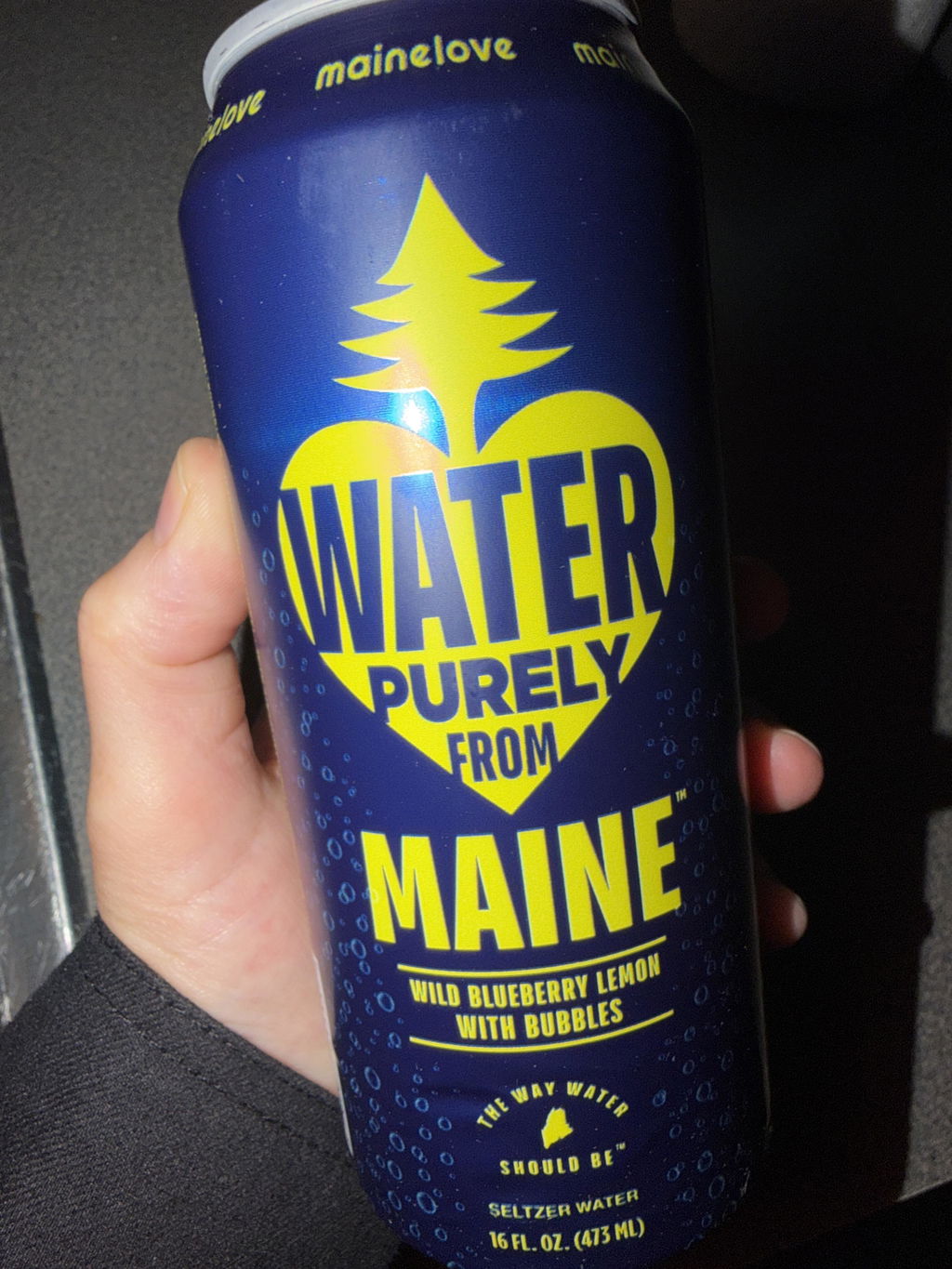
There’s a reason that our state flag and every can of mainelove water bears a pine tree. When we protect our forests, its gifts flow freely, granting us shade, shelter from the storm, pine-fresh air, and clear, cold water.